
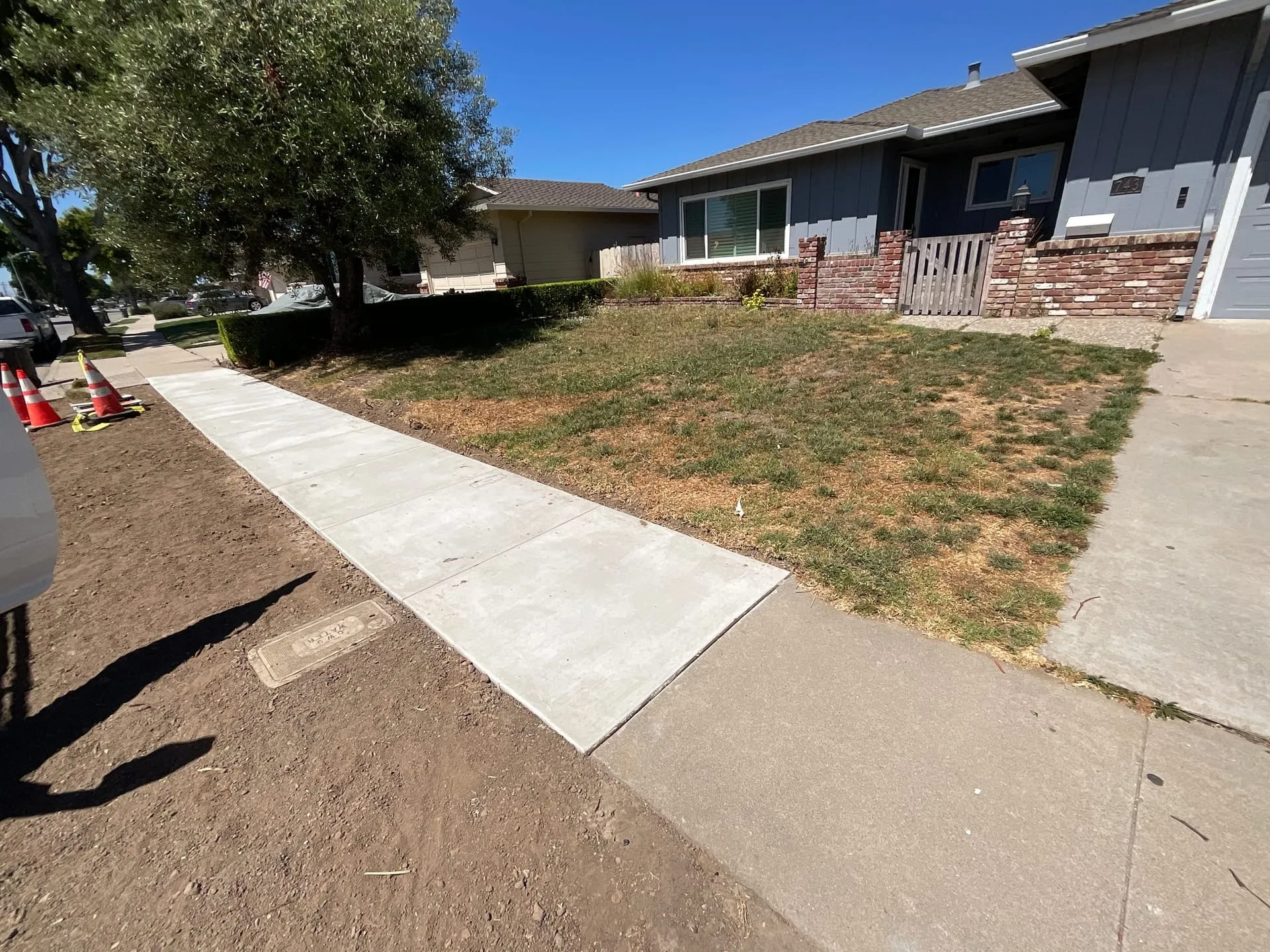
AB 1572 and Your HOA or Business: When Decorative Lawns Must Stop Getting Drinking Water
AB 1572 is a California law that stops the use of drinking water on nonfunctional turf, lawn nobody uses. Cal Water lists January 1, 2028 for commercial, industrial and institutional properties and January 1, 2029 for HOA common areas. It doesn't apply to single-family homes, and it doesn't require removing the lawn.
On this page· 14
- 01What is AB 1572?
- 02What counts as nonfunctional turf?
- 03What lawn can you keep watering?
- 04When does it start for each kind of property?
- 05Does it apply to homeowners' own yards?
- 06Do you have to tear the lawn out?
- 07What is the self-certification?
- 08What happens if a property keeps watering?
- 09What about trees and weather stations in the lawn?
- 10Where does your water come from, and who do you ask?
- 11Are there rebates for converting?
- 12How should a board or manager plan the change?
- 13How do we help with the plan and the paperwork?
- 14Sources
AB 1572 is a California law that stops most commercial properties and HOA common areas from watering nonfunctional turf, meaning lawn that nobody uses, with drinking water. For commercial, industrial and institutional properties, Cal Water lists the date as January 1, 2028. For HOA common areas, it's January 1, 2029.
If you sit on an HOA board or manage a commercial property in Salinas, Monterey or anywhere else in Monterey County, you need four answers: what counts, what's exempt, what the law requires, and how to plan the change. Our HOA contracts program includes water-use compliance and turf conversion.
What is AB 1572?
California enacted Assembly Bill 1572 in October 2023. Cal Water describes it as a law that "amended parts of the California Water Code to prohibit the use of potable (drinking) water to irrigate" nonfunctional turf. It is sometimes called the "Non-Functional Turf Ban."
Cal Water's summary of who it covers: AB 1572 "will prohibit the use of potable (drinking) water to irrigate nonfunctional turf ... at most commercial, industrial, and institutional (CII) properties, including common areas managed by homeowner associations (HOAs)."
"Potable" means drinking water from your water supplier. "Nonfunctional" has a definition in the law, and that definition decides which parts of a property the law reaches.
What counts as nonfunctional turf?
As Cal Water quotes the law, nonfunctional turf is "any turf that is not functional turf, and includes turf located within street rights-of-way and parking lots." In Cal Water's own words, nonfunctional lawn is "irrigated lawn that is ornamental and not regularly used for recreation or public gatherings."
Cal Water also offers a quick test: "If the only time people walk on the lawn is to mow it, it's likely nonfunctional."
The common examples Cal Water lists:
Cal Water's examples point to the places to check first on a walk: entry and signage zones, parking lots, and the edges of buildings, sidewalks and fences.
What lawn can you keep watering?
You can keep watering functional turf, meaning lawn in a recreational area or community space, plus the other exceptions Cal Water lists below. A lawn fenced off so people can't use it doesn't count as functional.
In the law's words, as Cal Water quotes them, functional turf is "groundcover surface of turf located in a recreational use area or community space." The term excludes "turf enclosed by fencing or other barriers to permanently preclude human access for recreation or assembly."
Cal Water lists these as allowed exceptions:
For an HOA, a lawn where residents play, picnic or gather can stay on its current water. The decorative strips around it are the ones that change.
When does it start for each kind of property?
It depends on the property. Cal Water lists January 1, 2028 for commercial, industrial and institutional properties and January 1, 2029 for HOA common areas, with public properties first in 2027. The full timeline:
The California Water Efficiency Partnership's NonFunctionalTurfCA.org lists the same four dates. For a shopping center, office park or industrial site, the date to plan around is January 1, 2028. For an HOA, it's January 1, 2029.
Does it apply to homeowners' own yards?
No. Cal Water says: "This regulation does not apply to single-family residential homes." In an HOA, the law reaches the common areas the association maintains, not each owner's own yard.
Cal Water says AB 1572 "affects HOA common areas only. Individual homeowners are not subject to this law for their private lawns or landscaped yards." It defines a common area as one "maintained by the HOA that is not assigned or allocated to the exclusive use of an individual dwelling unit's occupants."
Cal Water also notes that individual homeowners "should review their HOA or CID's governing documents and may need to seek independent advice and counsel." If your board maintains front yards for owners, ask your own counsel how the law treats those areas.
Do you have to tear the lawn out?
No. Cal Water says it twice on its AB 1572 page: you are not required to replace lawn by the compliance dates, only to stop irrigating it with potable water.
That leaves a board or owner three practical choices for each nonfunctional area:
The law itself only addresses the water. The property decides whether to convert an area, and to what.
What is the self-certification?
Larger properties have a reporting step. Cal Water says "Properties with 5,000+ square feet irrigated area must self-certify compliance to the State Water Board every 3 years." Its start dates for that are:
As of Cal Water's page on November 9, 2026, "The State has not yet issued a form or method to file for self-certification." Cal Water suggests documenting your lawn areas now with photos, notes or site maps, because "this record can help track progress and support future self-certification requirements."
What happens if a property keeps watering?
Cal Water says "Failing to comply may result in civil penalties and other enforcement measures." NonFunctionalTurfCA.org cites California Water Code section 1846 for those penalties, and adds that "Enforcement specifics may vary; please get in touch with your local water provider for details."
The next section lists the water suppliers in our service area, so you know whom to call.
What about trees and weather stations in the lawn?
Areas "within/under the canopy of a tree" are on Cal Water's list of exceptions. That exception matters on any property where a mature tree stands inside a lawn area you plan to stop watering.
Converting the lawn around a tree needs care. NonFunctionalTurfCA.org publishes best practices for existing trees during lawn conversion, and it says trees offer big benefits for neighborhoods and the environment. On a renovation, we can work around mature trees and established plantings and swap out just the areas that are failing or use the most water.
One less common item: some properties host a CIMIS weather station. NonFunctionalTurfCA.org advises: "If you have a CIMIS station, let your water supplier know before removing nonfunctional turf (NFT) to comply with AB 1572." It explains that "CIMIS stations require specific site and landscape conditions to collect accurate weather data," so check before the lawn around one changes.
Where does your water come from, and who do you ask?
AB 1572 is a state law, but your water supplier is the one that can answer questions about your account. In our service area, the suppliers named by the towns' own agency pages include:
On the Peninsula, MPWMD's own rules apply as well. Our Pebble Beach water compliance guide covers those district rules for HOAs.
Are there rebates for converting?
Yes. Cal Water runs a Lawn-to-Garden rebate for agencies, multifamily properties, HOA common areas and CII properties, paid per square foot of turf converted, and MPWMD runs its own lawn removal rebate on the Peninsula.
Cal Water's rebates page says "3 approved plants per 100 square foot converted is required." The same page rules out artificial turf for this rebate and requires approval before any work starts.
Cal Water adds that rebates "are offered on a first-come, first-served basis and are subject to available funding," and that programs "may be modified or discontinued at any time." Check the current terms on its Conservation Portal before you plan around a rebate.
For the MPWMD rebate, the site has to be pre-qualified before any lawn comes out.
How should a board or manager plan the change?
Cal Water lays out three steps: find and document the nonfunctional lawn, make a plan with your team, and phase the work rather than waiting for the deadline. In more detail:
Cal Water's reason for phasing is the budget: it suggests breaking the project into manageable phases to fit your budget and take advantage of rebates, and planning early to spread out costs and avoid rushed decisions.
How do we help with the plan and the paperwork?
For HOAs, we start with an on-site review with your manager or board and a written bid with scope, schedule and per-door pricing. Under contract, we send the board photo-documented monthly reports with compliance flags and recommendations.
We program smart controllers to your water provider's rules, MPWMD on the Peninsula, and document compliance in that monthly report.
For commercial sites, we produce the documentation you'd need for owner reports or state audits, and we recommend efficiency upgrades as part of our work for commercial property managers.
On the ground, a conversion pairs new planting with new irrigation. Converted beds go on drip, which delivers water at the roots, while lawn that stays in use keeps its spray or rotor heads in most cases. Our irrigation service converts beds zone by zone, and every softscape install we do includes drip and smart-controller zones. If your property already waters on a schedule, our Salinas watering guide covers timing.
To get started, request a program and tell us it's an AB 1572 walk. The first step is an on-site review with your manager or board.
Sources
Answers ahead
Questions we get asked the most
01Does AB 1572 apply to apartment complexes?
02Can we switch the lawn to artificial turf to comply?
03Is watering with recycled water allowed?
04Has the state released the self-certification form?
Done reading? Let's talk numbers.
Three quick ways to get pricing tailored to your property — no forms to grind through, no obligation.
More on HOA Contracts
Keep reading
HOA Landscaping01Understanding HOA Landscaping Requirements: A Complete Guide
December 20, 2024
HOA Landscaping02How to Request an HOA Landscape Bid in Salinas and Monterey
February 15, 2025
HOA Landscaping03HOA Landscaping Contract Costs in Carmel-by-the-Sea and Seaside: Pricing Breakdown
February 16, 2025